• GOOD TOUGH KID
  • ARCHIVES
  • M. James McDonald
Menu

True Myth Media

  • GOOD TOUGH KID
  • ARCHIVES
  • M. James McDonald

Search the Archives…

Contact Us/ Request a REview
Cloverfield.jpg

The Cloverfield Paradox (2018)

Directed By: Julius Onah

Starring: Gugu Mbatha-Raw, David Oyelowo, Daniel Brühl, Chris O’Dowd, Elizabeth Debicki

Rating: TV-MA

Running Time: 1 Hour 42 Min

TMM: 2.5/5

Strengths: Special Effects

Weaknesses: Writing, Directing, Story

The Cloverfield Paradox (2018)

February 8, 2018

Summary:

A team of scientists, working with volatile material in a space station orbiting the Earth, performs an experiment that could potentially solve Earth’s energy crisis. But when the experiment goes awry, the scientists are put in a grave situation.

film_cloverfield_paradox.jpg

My Thoughts:

The original “Cloverfield” turns ten this year, and that film was fine. Not good. Not bad. Fine. Just fine.

TheCloverfieldParadox_1-1.jpg

There was nothing utterly remarkable about it, though it was a fun, albeit disorienting, found footage thriller. Perhaps the best thing about the first movie was probably it’s clandestine approach to marketing. Before “Cloverfield” was released, the only thing we knew about the movie was from the very vague teaser trailer and the poster featuring a headless Lady Liberty. When I first heard about the sequel, “10 Cloverfield Lane”, I believed it to be completely unnecessary, but upon seeing it, I was pleased to find it was superior to its predecessor. Ditching the found footage gimmick worked wonders for them, the script was tight and tense, and I thought John Goodman completely reinvented himself for his role in that film. The film had resuscitated a franchise that had lay cold and abandoned for the better part of a decade. So when I heard that they were doing a third Cloverfield movie, my ears perked up; I was intrigued. I wondered if they could top the second film, or if, perhaps, this film would be a sign that Hollywood should let this beast die in peace.

My verdict after watching: maybe let the franchise die. It deserves some dignity.

That is not to say that there isn’t some good here; there is. The special effects won’t win any awards, but they don’t look as bad as some things I’ve seen of late; the acting, done by an A- and B-list cast, is absolutely fine (there’s that word again: fine). Chris O'Dowd is the most likeable character, though his comic relief is frequently out of  place. That’s about the extent of the good, however. There are many, many problems with “Paradox”, but the biggest issues are the writing, which is repetitive and sophomoric, and the story, which is utterly ridiculous, and filled with plot and loopholes. I thought about tagging spoilers throughout, but really there are so many ludicrous twists that it’d be hard to write a review without spoiling some things. In lieu of spoiler tags, I’m just letting you know that spoilers follow. You’ve been warned.

Hamilton (Gugu Mbatha-Raw, “Beauty and the Beast (2017)”) and her husband Michael (Roger Davies) wait in a long line at a gas station. There is an energy crisis on earth, and several countries, specifically Russia and Germany, are on the brink of war. It’s revealed that Hamilton is going to head up into space to be part of a team that will experiment with the Sheppard Particle Accelerator, which, if successful, could provide energy for the world indefinitely. Flash forward two years, and Hamilton is up in the space station with other scientists, still trying to figure out how to make this particle accelerator work. Among the crew are Schmidt (Daniel Bruhl, “Captain America: Civil War”), Mundy (Chris O’Dowd, “Bridesmaids”), Kiel (David Oyelowo, “Gringo”), Volkov (Aksel Hennie, “The Martian”), and Monk (John Ortiz, “Kong: Skull Island”). Plenty of fodder for the slaughter to come…

Hamilton talks to her husband on Earth through a telecom channel, telling him they only have enough fuel for a few more tests. It’s a bittersweet predicament. Hamilton misses her husband, but knows the work they’re doing in space could be important. The crewmembers go about preparing the next experiment while the news plays in the background. A harbinger warns, in lengthy expositional dialogue, that the experiments could open portals to different dimensions. The man warns that aliens, monster, or demons could come through this portal, but it could also rupture the space-time continuum, meaning that what they’re doing could not only affect the present, but the past and future as well… Perhaps the greatest part of the Cloverfield franchise was that the origin of the creature was shrouded in secrecy. The beast was like Lovecraft’s Cthulhu and the Great Old Ones; terrifying because we could not truly grasp what they were. By explaining where the monster comes from, the creators of the monster have effectively killed that murky mythos, and they’ve done so in a way that makes the beast seem cheesy. This was also the first place I laughed out loud, but don’t worry, there are plenty of other far-fetched ideas to come.

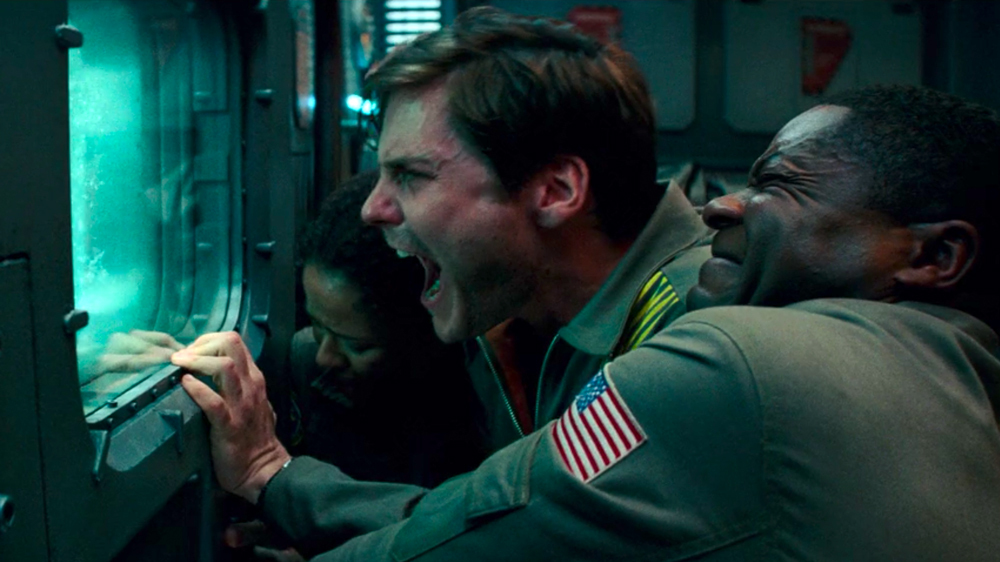
They crew members start the experiment and the ship shudders as the particle accelerator actually begins to work, but then there is a surge of power and crew members have to rush around to put out fires. After this is done, the crewmembers try to get their bearings but are shocked to discover they are no longer orbiting Earth. They hear screaming coming from behind a wall, and without a logical explanation, they open the wall panel to reveal a woman (Elizabeth Debicki, “Widows”) trapped inside, skewered by the inner wires and metal workings. She looks directly at Hamilton and says her name; the delivery is dripping with melodrama, and instead of bringing tension it instead prompted more laughs from my roommates and myself.

Meanwhile, Hamilton’s husband Michael awakens back on Earth to an explosion. He checks his phone and realizes that something horrible has happened, but nobody has an explanation as to what it is specifically. He decides to go to help the victims. How is he going to help the victims? Why is he charging headfirst into a danger zone like a deranged Kenny Loggins? Who knows, but it progresses the plot, so who really cares, right? Michael’s subplot is crudely stitched in throughout the film; every time we break from the space station to rejoin him on Earth, the scenes feel completely unnecessary and out of place. His storyline added nothing, in my personal opinion; they could’ve cut twenty minutes from the film and saved us all some time.
cloverfield-paradox.jpg
gallery-1517936340-cloverfield-paradox-eye.png

Eventually we learn that the space station has been transported across the galaxy, and not only that, but they’re also, somehow, in an alternate dimension. Cool, thought I, drinking up this tiny bit of goodness like a forgotten houseplant that’s gotten its first taste of water in weeks. I wanted this movie to be good, or at least watchable, so I had retained a bit of hope throughout the first forty-five minutes. There haven’t been a ton of multiverse movies, and none of them have been very good. Maybe this could redeem the rest of the film. Nope. The way the writers approach multiverse theory is silly; even Adult Swim’s “Rick and Morty” provides a more compelling, comprehensive picture of the theory.

The characters in this story continuously make bad decisions for seemingly no reason throughout the film. Why? Because it puts the characters in peril and the producers seemed to want a body count. These people are supposed to be the best of the best; the scientists that all of Earth has put their trust in. Many of the choices they make don’t make any sense at all. It’s frustrating but also unintentionally hilarious. I can’t say I was bored during the movie, but I can also guarantee I’ll never watch it again.

Another major issue I had with the film was the unimaginative production design- particularly the interior of the ship. The set looked like it was a repurposed or forgotten “Alien” setpiece. The hallways were claustrophobic and cramped, the lighting, mostly florescent, made the characters look pale and gaunt. This film looked like any other space-travesty movie you’ve seen: “2001: A Space Odyssey”, “Sunshine”, “Solaris”, even “Event Horizon”… If you’ve seen any of those, then you know what to expect as far as design.

As real scientific theories are introduced and then wildly broken into mumbo-jumbo to fit the purpose film, people on the ship start to die or befall accidents in horrible, but (sometimes) funny ways; worms exploding from faces, arms disappearing through wormholes. During one scene, Chris O’Dowd’s character says that he “Doesn’t know the rules anymore.” Neither do we. There are no discernable rules. The writers seemed to enjoy making stuff up as they went in an attempt to keep the viewer off-guard. We’ll I was caught off-guard by what they had to offer, but it wasn’t in the way they’d have liked. I found myself laughing, rolling my eyes, and making jokes more and more frequently as the film went on. As the risible final shot came onscreen, I said that I prayed they wouldn’t make a fourth Cloverfield movie. But hey, there’s money to be made, and Netflix will apparently greenlight anything.

Verdict:

“10 Cloverfield Lane” is easily the best of the three Cloverfield movies, but the interesting thing about this franchise is that it is an anthology series; none of the characters from previous films appear in the others. Potentially, a fourth film could once again reinvigorate the franchise, but “Paradox” has created a multitude of problems for any future follow-ups in this universe. “Paradox” is not the worst movie I’ve seen this year, but it is a galaxy away from the best (at least it’s better than Netflix’s “Bright”). 2.5 stars out of 5 is the best rating that I can give it, and that’s being generous.

Edit: One day after posting this review I learned that Cloverfield 4 (AKA “Overlord”) is already in post production, and is expected to release later this year. This time, they're opting out of Netflix for a theatrical release. Apparently the film will be set during the WW2 era, so it will play off this film in that the spacetime continuum has been permanently ruptured. JJ Abrams, the producer, has apparently already seen the film, and been quoted saying that Overlord is a "Crazy movie." D-Day paratroopers will fight Nazi's allied with supernatural powers. Well... I can't say that doesn't pique my interest. Watch for my thoughts on that later this year. EDIT EDIT: The Cloverfield tie-in was scrapped, but “Overlord” was alright.

Seth+Steele.jpg

Review Written By:

Seth Steele

Author's Bio Page
In Action, Adventure, Horror, Fantasy, Mystery, Thriller, Sci Fi Tags Chris O'Dowd, Cloverfield, Daniel Bruhl, David Oyelowo, Elizabeth Debicki, Gugu Mbatha-Raw, Horror, Julius Onah, Monster Movie, Sci fi, The Cloverfield Paradox, Thriller, 2018, Seth Steele, 2.5 Stars
Comment
images-1.jpg

Under the Shadow (2016)

Directed By: Babak Anvari

Starring: Narges Rashidi, Avin Manshadi, Bobby Naderi

Rating: PG-13 for Terror, Scary Images and Brief Language

Running Time: 1 Hour 24 Min

TMM: 4.5/5

Strengths: Symbolism, Writing, Directing, Atmosphere

Weaknesses: Weak Climax, Follows Some Horror Tropes

Under the Shadow (2016)

January 25, 2018

Shideh is a woman struggling to live beneath the patriarchal oppression of 1980’s post-revolution Tehran. As the city becomes the targets of more and more attacks, Shideh stays in the city, despite all of her neighbors fleeing for cover. She and her daughter are soon provoked by a djinn (in other cultures spelled jinn, or genie) that lives in her building.

Read More
In Drama, Horror, Thriller, Mystery Tags Avin Manshadi, Babak Anvari, Bobby Naderi, Foreign, Horror, Narges Rashidi, PG13, Thriller, Throwback Thursday, Under the Shadow, 2016, PG-13, 4.5 Stars
Comment
post.jpg

The Post (2017)

DIRECTED BY: STEVEN SPIELBERG

STARRING MERYL STREEP, TOM HANKS, BOB ODENKIRK, SARAH PAULSON

RATING: PG-13 FOR LANGUAGE AND BRIEF WAR VIOLENCE

RUNNING TIME: 1 HOUR 54 MIN

TMM: 4 OUT OF 5 STARS

STRENGTHS: TIMELINESS, WRITING, DIRECTING, ACTING AND CINEMATOGRAPHY

WEAKNESSES: PACING DURING THE FIRST ACT

The Post (2017)

January 22, 2018

Summary:

As Kay Graham preps the Washington Post to go public, a large government cover up story revolving around the outcome of the Vietnam War breaks, and she is forced to choose whether or not to publish material that Nixon is trying to conceal. Publishing could mean major backlash from investors and possible jail time, but not publishing could bring about the death of the First Amendment and possibly prolong the fighting in Vietnam.

thepost1.jpg

My Thoughts

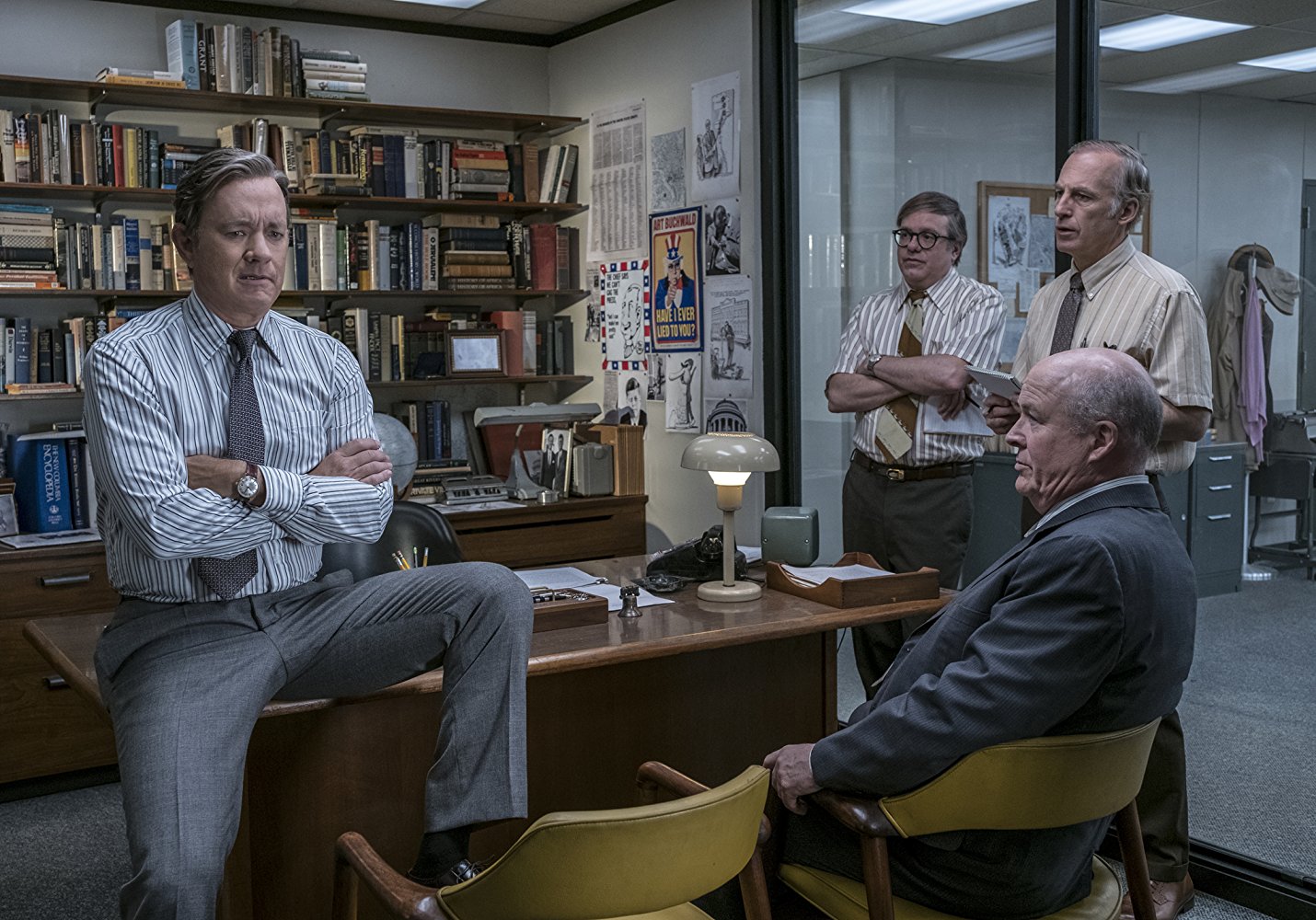
Seeing Streep and Hanks lead an all-star cast while Spielberg works his magic behind the camera should be enough to get any cinephile to the theatre. This movie, while slow and somewhat convoluted at the beginning, is one of the most important movies of the year. Why? The answer lies in the first scene Streep and Hanks have ever shared together. At a luncheon meeting, Hanks is justifiably upset that Nixon is refusing to let a reporter from the Post cover Nixon’s daughter’s wedding, because of the coverage they put out on another article a few years ago. He says: (I’m paraphrasing slightly here- the exact wording escapes me) “Just because the president doesn’t like the coverage we give him doesn’t mean he gets to dictate what we publish.”

In the dark corner of the small, sparsely populated theatre, I couldn’t help but smile.

thepost.jpg

The film starts in Vietnam with a brief but chaotic battle scene. Daniel Ellsberg (Matthew Rhys, “Burnt”), a military analyst, types up his thoughts on the progress made. On Air Force One, the Secretary of Defense, Robert McNamara (Bruce Greenwood, “Star Trek (2009)”), asks Ellsberg for his opinion on the war, and disheartened, Ellsberg says that nothing has really changed. McNamara, frustrated, turns to H.R. Haldeman, Nixon’s chief of staff, and says that they’ve been deploying more soldiers to Vietnam, and the lack of progress despite more troops effectively means the war is getting worse. Immediately after landing however, McNamara smiles at the press and tells them the war is going well. Ellsberg wont stand for this, so he begins to covertly sneak classified documents from the Pentagon, making copies with his coconspirators. Upon reading the documents, he discovers the government’s lie stretches further than Nixon’s presidency; the cover-up was known by the four previous presidents: Truman, Eisenhower, Kennedy, and Johnson.

While the film starts off with a (literal) bang, the next half hour of the film takes a noticeable loll as it tries to find its footing. Kay Graham (Meryl Streep, “The Iron Lady”) nervously discusses plans for the company to go public with Fritz Beebe (Tracy Letts, “Lady Bird”), a trusted friend and board member for the Post. He reassures her that everything will go fine, but she is determined to memorize her talking points. She meets with the Post’s Chief Editor, Ben Bradlee (Tom Hanks, “Saving Private Ryan”) to discuss how to attract a wider demographic. Graham then goes to a board meeting, wearing a greyish suit but surrounded by a sea of men in black; she is a woman, desperately floundering to stay afloat and relevant in a business run predominantly by men. During a board meeting, when Arthur Parsons (Bradley Whitford, Get Out) asks a question regarding the budget, she answers, but the answer is ignored until a Beebe parrots her. Throughout the film, there are dozens of shots where Streep is literally surrounded by men that loom over her, almost claustrophobically so. The recurring theme of woman being forced to the back of the workplace is impressively subtle, but also incredibly important. Streep is looked on as a type of stoic, silent role model for women.

For a while we are a fly on the wall of the Post, watching as Bradlee scrambles around the office trying to put together the next paper with his reporters, while simultaneously keeping a close eye on his rival competitors: The Times. Bradlee sends an intern to the Times to try to find out what the Time’s best reporter, Neil Sheehan, is working on. The intern is unable to find out what the piece is on, but he does find out that Sheehan’s article will be on the front page the next day. Meanwhile, Graham receives a visit from McNamara, who is a lifelong friend, and he tells her that the Times will be printing something about him on the front page. The next day, the Times publish their first story on the Panama Papers and it takes the country by storm. During a dinner Graham the Times editor, Abe Rosenthal (Michael Stuhlbarg, “Call Me By Your Name”), Rosenthal receives word that Nixon intends to take the Times to court over the published documents.

Ben Bagdikian (Bob Odenkirk, “Incredibles 2”), a reporter with the Post, after hours of cold calling, finally makes contact with Ellsberg. Ellsberg meets Bagdikian in a motel; documents are spread round the cheap room in thick, incriminating piles. Ellsberg asks if Bagdikian would go to jail to stop the Vietnam War, and Bagdikian answers, “Hypothetically, yeah.” Ellsberg shakes his head. “You’re going to publish, right? Then this isn’t hypothetical.” As the story progresses, and the Post’s reporters diligently comb through the thousands of pages to find a story, the question of whether or not Graham will allow the story to go to press garners more and more implications. Should Graham publish, not only will the Post be going directly against an order of the courts, but she may also be putting her freedom, and the freedom of those she works with, at risk.

The Good:

the-post-2.jpg

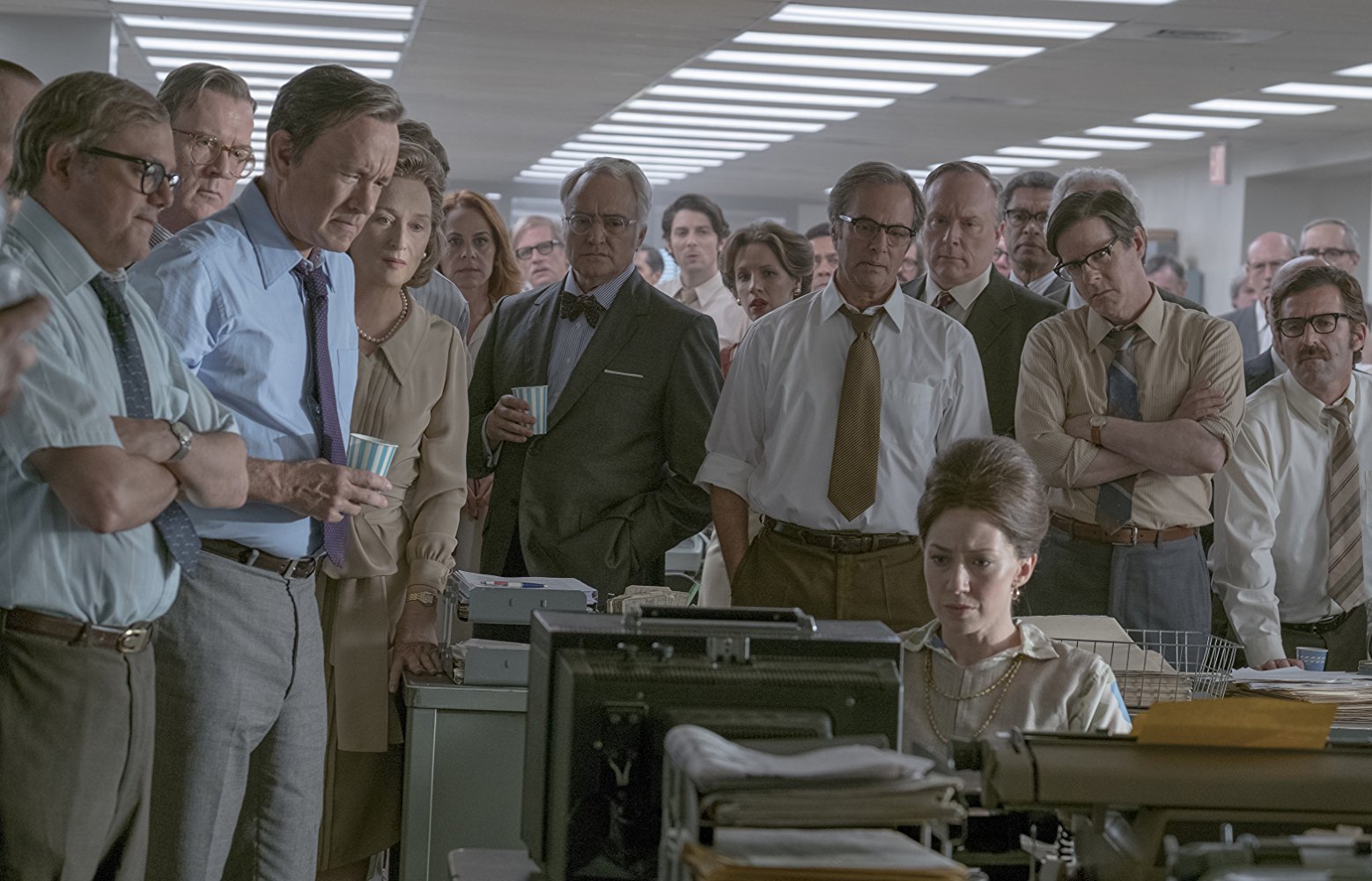
Spielberg is in fine form here; though his subject matter isn’t as intense as some of his well-known Blockbusters, he still manages to build a surprising amount of tension throughout the film. There are plenty of long takes with expertly choreographed deep staging. He provides plenty of background humor with minor characters, and he conveys the hectic nature of a newsroom with beautiful precision. The writing of Liz Hannah and Josh Singer (“Spotlight”) brilliantly touches on many issues of the era and also succeeds in drawing many comparisons to modern times. I would honestly be surprised if this didn’t receive a nomination for writing.

thepost2.jpg

Streep is fantastic as the meek-mannered but firm Graham; she does an amazing job making us feel her constant insecurity but desire to prove herself. The real scene-stealer was Hanks, whom I thought gave his best performance in years. “Captain Phillips” (2013) was the last time Hanks really generated Oscar buzz, but I would not be at all surprised if we see him on the docket this year. But though Hanks and Streep were the standouts, everyone else in the A-list cast provided commendable performances as well; particularly Odenkirk, who really shines as the nervous but tenacious Bagdikian.

The Bad:

As I said before, the beginning of this movie is a little convoluted and slow. There are so many characters wrapped up in all of this, all of which are important; but at the start, the viewer almost feels like a person on their first day at a new job, being introduced to everyone in the office and expected to remember names. It’s overwhelming. But soon, as the pacing picks up, you get caught up in the story and the drama, and the movie sweeps you right along with it.

Verdict:

(MINOR SPOILERS)

Towards the end of the film, a portion of Justice Hugo Black’s statement is read: “In the First Amendment the Founding Fathers gave the free press the protection it must have to fulfill its essential role in our democracy. The press was to serve the governed, not the governors.” That quote drew some small applause from the people in my theatre. Whatever your stance on the whole Fake News hullabaloo that's permeating current daily news, this statement by Black is extremely important, and I believe the entire reason Spielberg made this film. As Americans, its our inalienable right to be informed and speak our minds; it’s why freedom of speech is our first amendment. No, the government might not always like what the media says, but tough luck. Grow a spine and take it. You asked for power; deal with the byproduct. The people in charge need to be okay with their power being questioned, because, in the words of Terry Pratchett: “Authority that cannot be questioned is tyranny. And I will not stand for tyranny.”

Seth+Steele.jpg

Review Written By:
Seth Steele

Author's Bio Page
In Biographical, Crime, Drama, Mystery, Thriller Tags Bob Odenkirk, Bradley Whitford, Bruce Greenwood, Drama, Four Stars, Matthew Rhys, Meryl Streep, Michael Stuhlbarg, PG13, Sarah Paulson, Steven Spielberg, Tom Hanks, Tracy Letts, 2017
Comment
Get-OUT.jpg

Get Out (2017)

DIRECTED BY: JORDAN PEELE

STARRING: DANIEL KALUUYA, ALLISON WILLIAMS, BRADLEY WHITFORD, CATHERINE KEENER, CALEB LANDRY JONES

RATING: R FOR VIOLENCE, BLOODY IMAGES, AND LANGUAGE INCLUDING SOME SEXUAL REFERENCES

RUNNING TIME: 1 HOUR 44 MIN

TMM: 4.5 OUT OF 5 STARS

STRENGTHS: TIMELINESS, WRITING, ACTING, UNCONVENTIONALITY, MESSAGE

WEAKNESSES: LACK OF SCARES FOR GENRE-HARDENED FANS

Get Out (2017)

January 18, 2018

An African American man goes to a bourgeoisie neighborhood with his caucasian girlfriend to meet her parents. By all appearances the family is amiable, but under all the faux civility, the pleasant suburbia holds a dark secret.

Read More
In Drama, Fantasy, Horror, Mystery, Sci Fi, Thriller Tags Allison Williams, Bradley Whitford, Caleb Landry Jones, Catherine Keener, Daniel Kaluuya, Jordan Peele, 4.5 Stars, 2017
Comment
05shapewater2-master1050.jpg

The Shape of Water (2017)

DIRECTED BY: GUILLERMO DEL TORO

STARRING: SALLY HAWKINS, MICHAEL SHANNON, RICHARD JENKINS, OCTAVIA SPENCER

RATING: R FOR SEXUAL CONTENT, GRAPHIC NUDITY, VIOLENCE AND LANGUAGE

TMM: 5 OUT OF 5 STARS

STRENGTHS: DIRECTION, WRITING, CINEMATOGRAPHY, PRODUCTION DESIGN, MUSIC, ACTING

WEAKNESSES: SUBJECT MATTER MAY NOT APPEAL TO EVERYONE

The Shape of Water (2017)

January 2, 2018

Summary:

A mute janitor, responsible for cleaning a government lab during the Cold War, develops a bond with the peculiar creature being housed there.

shapecover.0.jpg

My Thoughts:

shapeofwater_crop.0.jpg

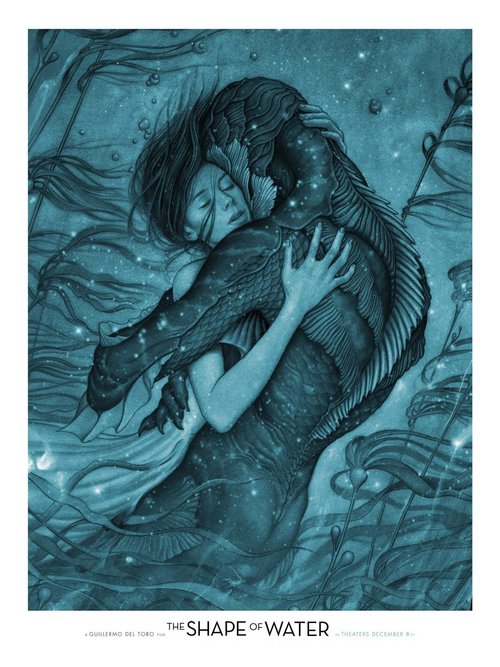
Guillermo Del Toro’s latest addition to the fantasy genre is reminiscent of Pan’s Labyrinth, but in all the right ways. Both “Pan” and “Water” rely heavily on tales from old folklore, myth and legend; and both are magical realism in settings of wartime. While “Pan” tells us a story about the fae, “Water” focuses on mermaids. Del Toro has built a career around his darker fantastical visions; his style is unique in that the magic in the worlds he creates is always secondary to the characters living in that world. He makes us care about the characters; we cry for them when they hurt and laugh with them when they feel happy. As we enter into the fringe of awards season, Shape of Water leads the Golden Globe race with seven nominations for Best Drama, Director, Screenplay, Score and three acting nominations for Hawkins, Jenkins, and Spencer.

Sally Hawkins (“Happy-go-Lucky”) plays the mute janitor, Eliza. Within the first few minutes of the movie, her character’s whimsy sets the tone. She goes about her daily routine in a dancelike fashion, flitting from here to there without a care in the world. It’s hard not to take a liking to Eliza immediately. She converses amiably with her neighbor, Giles, a closeted homosexual, played by Richard Jenkins (“The Cabin in the Woods”). She goes to her job where we are introduced to her effervescent friend and fellow janitor, Zelda (Octavia Spencer, “The Help”). They spend their time mopping the shadowy halls of the facility, Zelda chatting amiably away, until something is brought into a chamber; a large cylinder reminiscent of an isolation chamber, inside is one whom the credits have dubbed Amphibian Man (Doug Jones,“Hellboy”).

In the minutes after learning about the existence of this creature we are giving the foundations of the plot. Michael Shannon’s (“Fahrenheit 451”) tenacious, unflinching character, Richard Strickland, reveals that he’s dragged Amphibian Man out of the dark depths of the Amazon all the way to this tiny seaside town to find out what makes the creature tick, hoping that in studying the creature they might make a breakthrough in breathing without air- something he believes could be very useful in the Space Race against the Russians. Strickland is everything Eliza isn’t; where Eliza is a mute, Strickland is always barking commands; where Eliza is bubbly and mischievous, Strickland is always down to business, no nonsense. The two characters dance around each other creating perfect balance in celluloid. Michael Stuhlbarg (“Call Me By Your Name”) plays Dr. Robert Hoffstetler, a scientist first and foremost, but he’s also doubling as a spy for the Russians. With the characters set on the murky stage, the story begins.

Perhaps the best part of this movie is the believability of the actions taken by the characters and the changes they endure as a result. Every character, no matter how small, is dynamic; they all learn something, and different things drive them each of them towards their goals. Even Strickland, the villain of the film, has specific reasons for what he does, and though he isn’t a sympathetic character, he is one who’s actions are easy to understand when looking at it from his perspective. Giles, Zelda, and Hoffstetler, too, all have their own moral dilemmas they go up against, and each one handles it in a way that makes perfect sense for their characters.

shape_water.0.jpg
TheShapeOfWaterTank.0.png.jpg

The actors here are all veterans of their craft. Of the top billed cast only Doug Jones and Michael Stuhlbarg have yet to be nominated for an Oscar; the talent soaks through the screen without filter. Hawkins and Shannon steal the show for the majority of the movie, but Doug Jones manages to evoke a surprising amount of emotion and convey his curiosity even under all the makeup. Hawkins’s presence is something to behold, as she has next to no actual dialogue, she still manages to captivate the audience through her mannerisms and personality quirks. Her character’s happy-go-lucky nature shifts seamlessly into open defiance against Strickland, a change we are all too excited to witness. Shannon is phenomenal as always. While not nearly as subtle as he was in “Nocturnal Animals” or “Take Shelter”, he gives a chilling performance as a man driven to complete his work, even if it drives him to the brink of insanity.

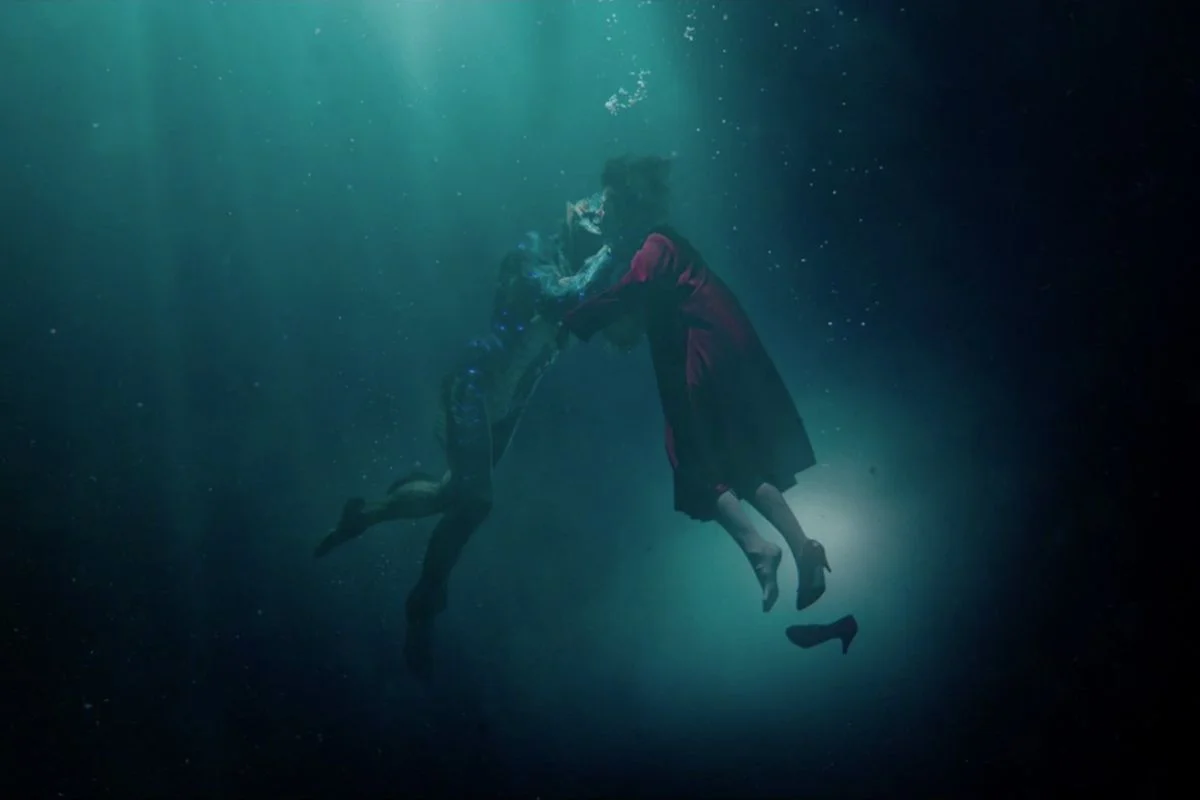
Another fantastic element, one that rarely lacks in any of Del Toro’s films, is the production design. The film has a teal hue that permeates throughout, water spills, drips and pours over nearly every frame, much of the lighting is done from above and has shimmering elements to it- as if the whole movie were lit underwater. Many of patterns on the walls in the government facility look like ripples or waves. Water being in the title, it shouldn’t come as a surprise that water is featured prominently throughout the film, but Del Toro has found a way to make water flow through this film even when there’s none on screen. The design of Amphibian Man is flawless, and while it’s clearly paying homage to the “Creature from the Black Lagoon”, the design is far improved from the 1954 classic Universal Monster flick. Much like the Faun in Pan’s Labyrinth, the character relies on heavy prosthetic makeup instead of CGI, something that works to the advantage of the aesthetic- the creature feels far more tactile this way.

This is not necessarily a weakness, per say, but it is something that may turn off a number of viewers. The theme of this film revolves around love and the unconditional nature of truly unselfish love. There are brief, fragile glimpses of this type of love through the film; between Giles and the Diner owner, Zelda and the husband she complains about constantly but loves regardless. As the story progresses, a romantic interspecies relationship develops. While the story is meant to convey the idea that all love is valid, some viewers may find the relationship between Elisa and Amphibian Man a bit too strange for them. Indeed, during one of the more physical scenes of the movie I heard exclaimed from the darkened theatre a quiet uttering of the word “gross,” to which there arose a warbling of giggles. I have a hard time believing that those who can’t get past this will fully appreciate the movie; some suspension of disbelief is required for the full impact.

It is a fantasy film, after all.

Verdict

It’s rare that a fantasy film is made this well, and rarer still that the characters are so relatable and the themes are so relevant today. Del Toro has proven time and again that he knows how to create magical worlds with real emotional impact, and though this film doesn’t quite live up to “Pan’s Labyrinth” (a movie I consider to be very close to perfect), it does create a world that is unforgettable, beautiful, and, most importantly, magical. The ancient theme of love conquers all, while well-worn, still has a place in today’s world, and this film does a wonderful job of addressing the fragility and nature of misunderstood love. Fans of fantasy would be hard pressed to find a better genre film this year.

Seth+Steele.jpg

Review Written By:

Seth Steele

Author's Bio Page
In Drama, Fantasy, Mystery, Thriller, Romance Tags Doug Jones, Guillermo Del Toro, Michael Shannon, Michael Stuhlbarg, Richard Jenkins, Sally Hawkins, R, 5 Stars, 2017
Comment
p4777_p_v8_aa.jpg

The Tenant (1976)

Directed by: Roman Polanski

Starring: Roman Polanski, Isabelle Adjani, Melvyn Douglas

RATED: R

Running Time: 2h 6m

TMM SCORE: 4.5 STARS OUT OF 5

STRENGTHS: Direction, Writing, Cinematography, Pacing, Acting

WEAKNESSES: Also Pacing

The Tenant (1976)

December 27, 2017

Summary:

Trelkovsky is a young bachelor renting an apartment in Paris which had previously belonged to a woman who’d committed suicide. The longer he stays at the apartment, the more paranoid he becomes about the intentions of his callous neighbors.

My Thoughts:

Reader’s Note: Before diving into the claustrophobic world of The Tenant I’d like to address the inevitable elephant in the room that unfortunately comes with every Polanski film. No, I do not approve of Polanski’s personal choices in life, but I do find his work compelling. It also does not escape me that this was the last film Polanski made before becoming a fugitive from the US following the Samantha Geimer incident. Now more than ever, as the #MeToo movement erupts across Hollywood, the question of whether or not we can judge art separately from the artist hangs in the air. I don’t have an answer for that question; you must make that choice yourself. If you’d like to hear more of my thoughts the Polanski /Geimer incident, I urge you to check out my review for “Roman Polanski: Wanted and Desired”.

the-tenant-1976.jpg
thetenant.jpg

This film is the final and often forgotten about entry in Polanski’s Apartment Trilogy (following “Repulsion” and “Rosemary’s Baby”). The apartment trilogy is not being a conventional trilogy with a continuing storyline, instead the films center round similar themes of claustrophobia, sexual repression, paranoia and slow descent into madness. These are themes around which Polanski has built a career.

“Filthy little brat!”

When looking for an apartment to rent in Paris, Trelkovsky (Polanski, “The Fearless Vampire Killers”) wanders into a tall, narrow, gothic building where there is a room for rent on one of the upper floors. The vacancy is good news for Trelkovsky, but the reason for the opening, he soon learns, is because the previous tenant threw herself out the window (when touring the room he peers curiously out the window and sees the exact spot where she fell). Before moving in, Trelkovsky meets a curmudgeonly old neighbor (Melvyn Douglas, ”Being There” ) who complains about the woman who’d committed suicide, and all the racket she made. Trelkovsky reassures the man that he’s a quiet bachelor; the neighbor retorts, “Bachelors can be a problem, too.”

So begins the standoff.

One night, soon after moving in, Trelkovsky has a few friends over for a housewarming party, including a young woman named Stella (Isabelle Adjani, “Possession”). They drink, put on a few records, and talk quietly amongst themselves, but apparently, not quietly enough, for soon the neighbors are rapping on the door and calling for the music to be shut off and his friends to leave. Desperate to make a good impression, Trelkovsky decides he’ll keep to himself when he’s home, so as to make as little noise as possible, but in doing so he retreats into isolation. Paranoia sets in. Was there someone watching him from the dark apartment across the road? Is there someone waiting in the stairway outside his door? Who were the people wandering down in the shadows of the street? Is he being too loud as he walks about? Are his neighbors in on some malevolent plot together? What really happened to the woman who lived in the apartment before him?

big_1409619945_1382556661_image.jpg
MV5BMDQzMjViOGItOTg0Ni00OGY0LThkMjUtOGI5ZmFmY2VhMDU3XkEyXkFqcGdeQXVyMzU4ODM5Nw@@._V1_.jpg

Many horror films today shy away from the psychological reasons of why things scare us, instead opting for blood, gore and nudity (look at half the films included in 31 Nights of Thrills). Those films are fine if you’re looking to kill some time on a rainy afternoon. By the time you go to bed, you’ll have forgotten about the horrors you saw earlier that day. Not so with Polanski’s films. Polanski shies away from gore and guts, and instead he likes to linger on the terror of confusion. He likes to play with your emotions and make you wonder what’s gathering in the dark corners. Many times the viewer isn’t sure what is real and what isn’t. Even after the credits roll there are some questions left unanswered, or answered ambiguously. The confusion that Polanski creates for the character bleeds from the screen into the viewer’s mind, seeping deeper and lingering longer than any splatterfest today.

Fans of Polanski’s work will recognize the deliberate pacing associated with his other films (“Rosemary’s Baby” in particular); the film starts off slowly before building to its shocking, horrific climax. Polanski dazzles in taking the reins as director, lead actor, and co-writer of this brilliant piece of cinema. As his character sinks further into madness, his performance never slips. He lingers on the things that make us uncomfortable, and delights in shocking us with a disturbing ending. The viewer never really knows what is going to happen next, and even when we think we’ve figured it out, there always seems to be something else we hadn’t expected. As a horror film it succeeds in shocking, exhilarating and disturbing the audience.

Verdict

While I cannot recommend “The Tenant” to everyone, there are certainly people who will see it for the masterful work of art that it is. The film is slow but it is very rewarding for those who stick it out to the end. For fans of 70’s cinema, claustrophobic thrillers and twisty plots this film will be a delight… maybe not a delight- but certainly a thrill.

Seth+Steele.jpg

Review Written By:

Seth Steele

Author's Bio Page
In Drama, Horror, Thriller, Mystery, Crime Tags Rated R, 4.5 Stars, Roman Polanski, Isabelle Adjani, Melvyn Douglas, Jo Van Fleet, 1976
1 Comment
mummyposter.jpg

The Mummy (2017)

Directed by: Alex Kurtzman

Starring: Tom Cruise, Sofia Boutella, Annabelle Wallis

Rated: PG-13 for Violence, Action and Scary Images, and Some Suggestive Content and Partial Nudity

Running Time: 1 H 50 M

TMM: 2 out of 5 Stars

Strengths: One of the Action Sequences

Weaknesses: Everything Else

The Mummy (2017)

June 12, 2017

Tom Cruise fights a Mummy in the first and last installment of the Dark Universe Series.

Read More
In Action, Adventure, Mystery, Thriller, Fantasy Tags 2 Stars, PG13, Alex Kurtzman, Tom Cruise, Russell Crowe, Annabelle Wallis, Sofia Boutella, Jake Johnson, Courtney B. Vance, 2017
Comment
arrivalposter.jpg

Arrival (2016)

Directed by: Denis Villeneuve

Starring: Amy Adams, Jeremy Renner, Forest Whitaker

Rated: PG-13 for Brief Strong Language

Running Time: 1 H 56 M

TMM: 5 out of 5 Stars

Strengths: Story, Editing, Acting, Cinematography, Musical Score

Weaknesses: -

Arrival (2016)

June 1, 2017

A linguistics specialist is recruited by the US army to try to make contact with Aliens.

Read More
In Drama, Adventure, Mystery, Thriller, Sci Fi Tags 5 Stars, PG13, Denis Villeneuve, Amy Adams, Jeremy Renner, Forest Whitaker, Michael Stuhlbarg, 2016
Comment
Batman.jpg

Batman v Superman: Dawn of Justice (2016)

Directed By: Zack Snyder

Starring: Ben Affleck, Henry Cavill, Amy Adams

Rated: PG-13 for Intense Sequences of Violence and Action Throughout, and Some Sensuality

TMM: 2 out of 5 Stars

Strengths: Wonder Woman, Visually Engaging, Iconic

Weaknesses: Slow Pacing, Lack of Connection to Characters, Studio Concerns, Lack of Mystery, Henry Cavill

Batman v Superman: Dawn of Justice (2016)

March 29, 2016

Batman and Superman meet in a clash of psuedo-epicness.

Read More
In Superhero, Action, Adventure, Mystery Tags 2 Stars, PG13, Ben Affleck, DC Movies, Henry Cavill, Amy Adams, Jesse Eisenberg, Diane Lane, Laurence Fishburne, Jeremy irons, Holly Hunter, Gal Gadot, Scoot McNairy, Zack Snyder, 2016
Comment
RISEN_DOM_1SHEET.jpg

Risen (2016)

Directed by: Kevin Reynolds

Starring: Joseph Fiennes, Tom Felton, Peter Firth

Rated: PG-13 for Biblical Violence Including Some Disturbing Images

TMM: 3 Stars out of 5

Strengths: Production Value, Joseph Fiennes

Weaknesses: Disjointed Story, Stephen Hagan

Risen (2016)

March 22, 2016

A roman Tribune searches for Christ after the ressurection.

Read More
In Christian Film, Drama, Adventure, Mystery Tags 3 Stars, PG13, Risen, Kevin Reynolds, Joseph Fiennes, Tom Felton, Peter Firth, 2016
Comment
← Newer Posts

Powered by Squarespace